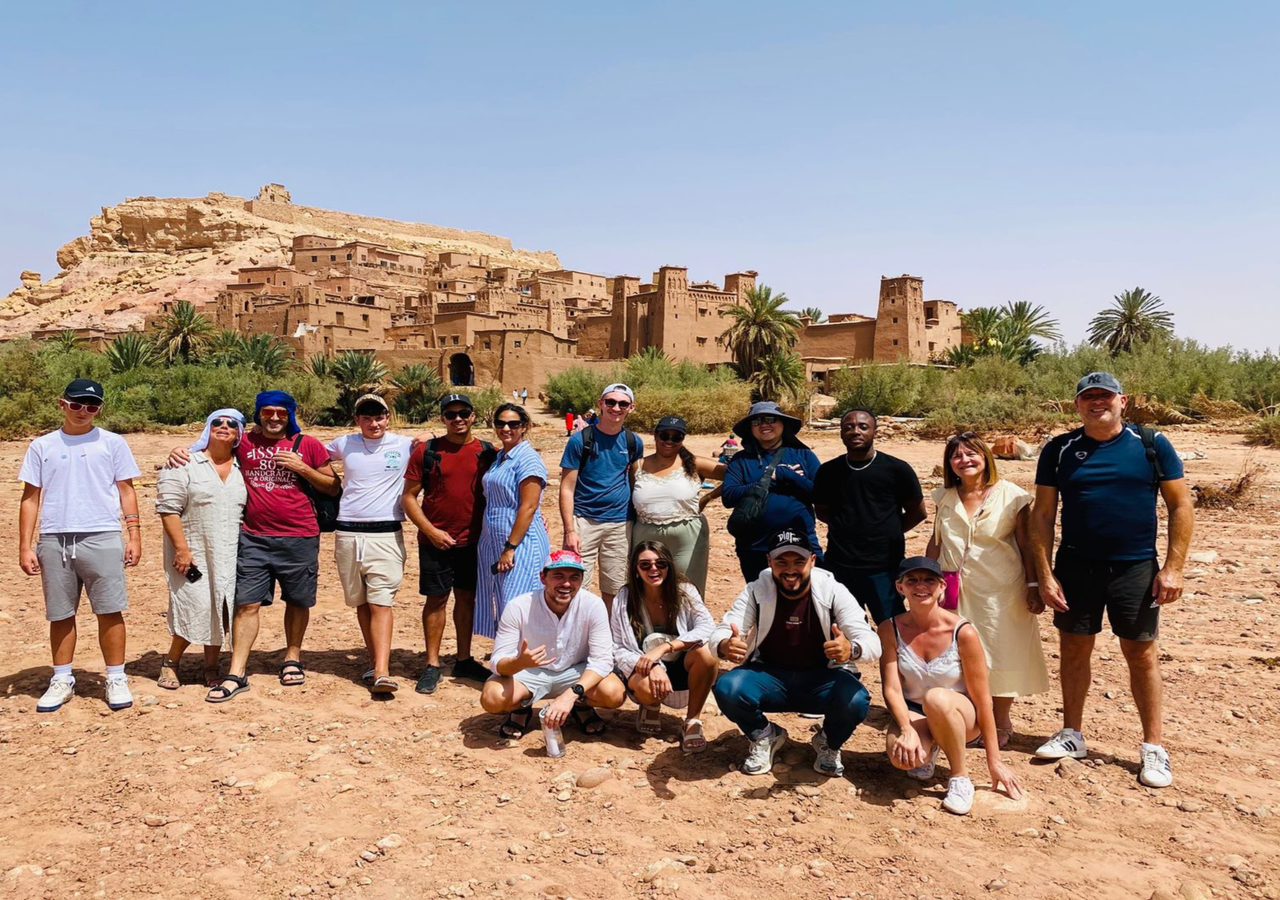
11 hr
Ouarzazate & Ait Benhaddou Day Trip from Marrakech
Cross the High Atlas, tour a legendary film studio, and explore a UNESCO kasbah in one day.
ReserveHand-picked by our editors — only the best 5 experiences from 240 reviewed.
Verified partners for every tour, free cancellation where available, and instant confirmation on every booking.
11 hr
Cross the High Atlas, tour a legendary film studio, and explore a UNESCO kasbah in one day.
Reserve
11 hr
Full-day trip over the Tichka Pass to a UNESCO kasbah and a famous film studio.
Reserve
72 hr
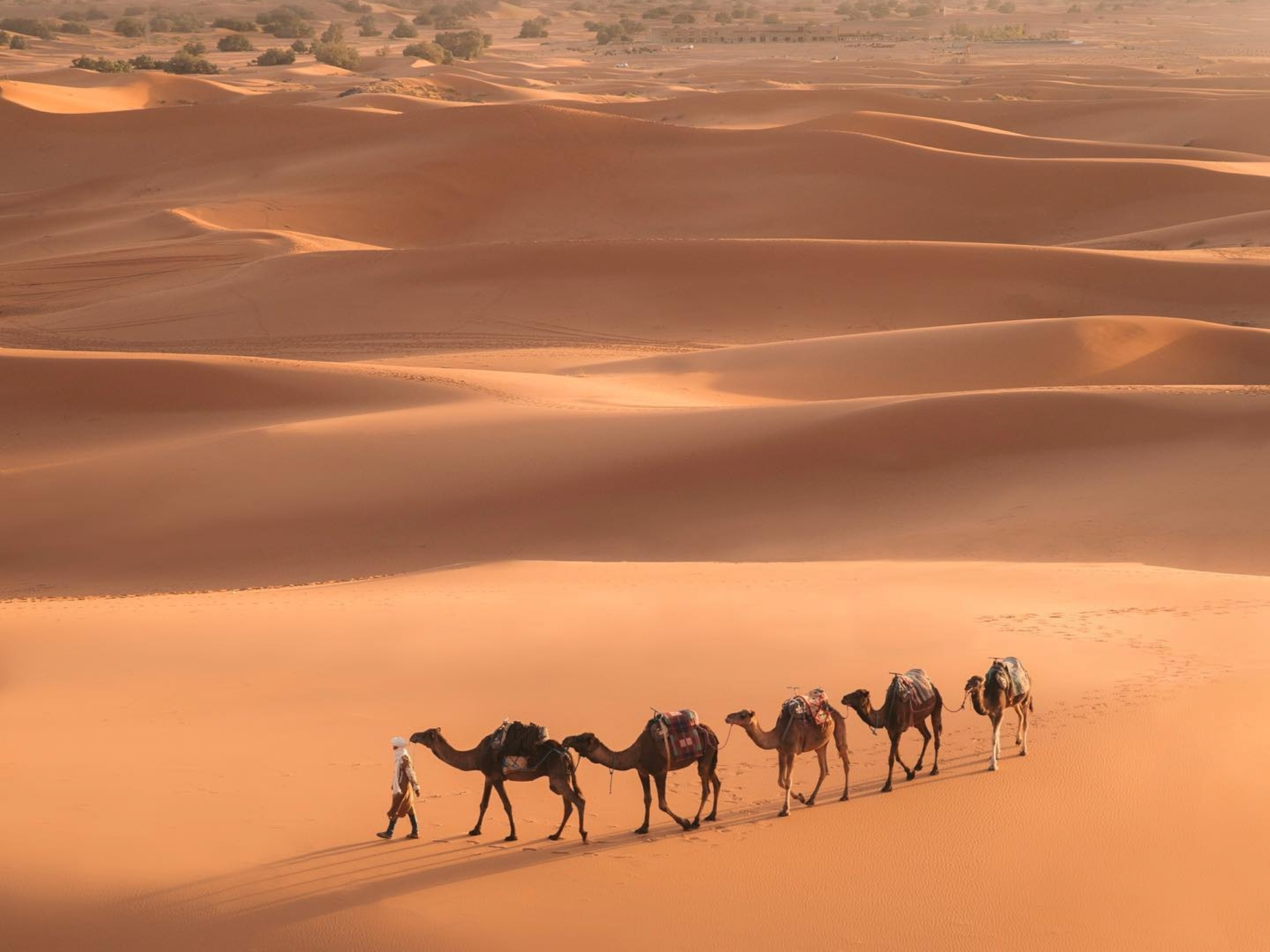
3 days from Marrakech to the Sahara: Atlas Mountains, a desert camp, and camel rides under the stars.
ReservePrices from verified partners. Availability updates in real time at checkout. Free cancellation policies apply where shown.
The landmarks, rooms, and views travelers on this tour remember — all visible on a single visit.
Located at the highest point of the village, this structure was used to store grain for the community. It offers a vantage point for photos of the surrounding desert landscape.
Constructed from thick mud bricks, these walls have protected inhabitants for centuries against invaders and extreme desert climates.
These multi-story houses are built into the hillside using pise construction techniques to stay cool during hot summers.
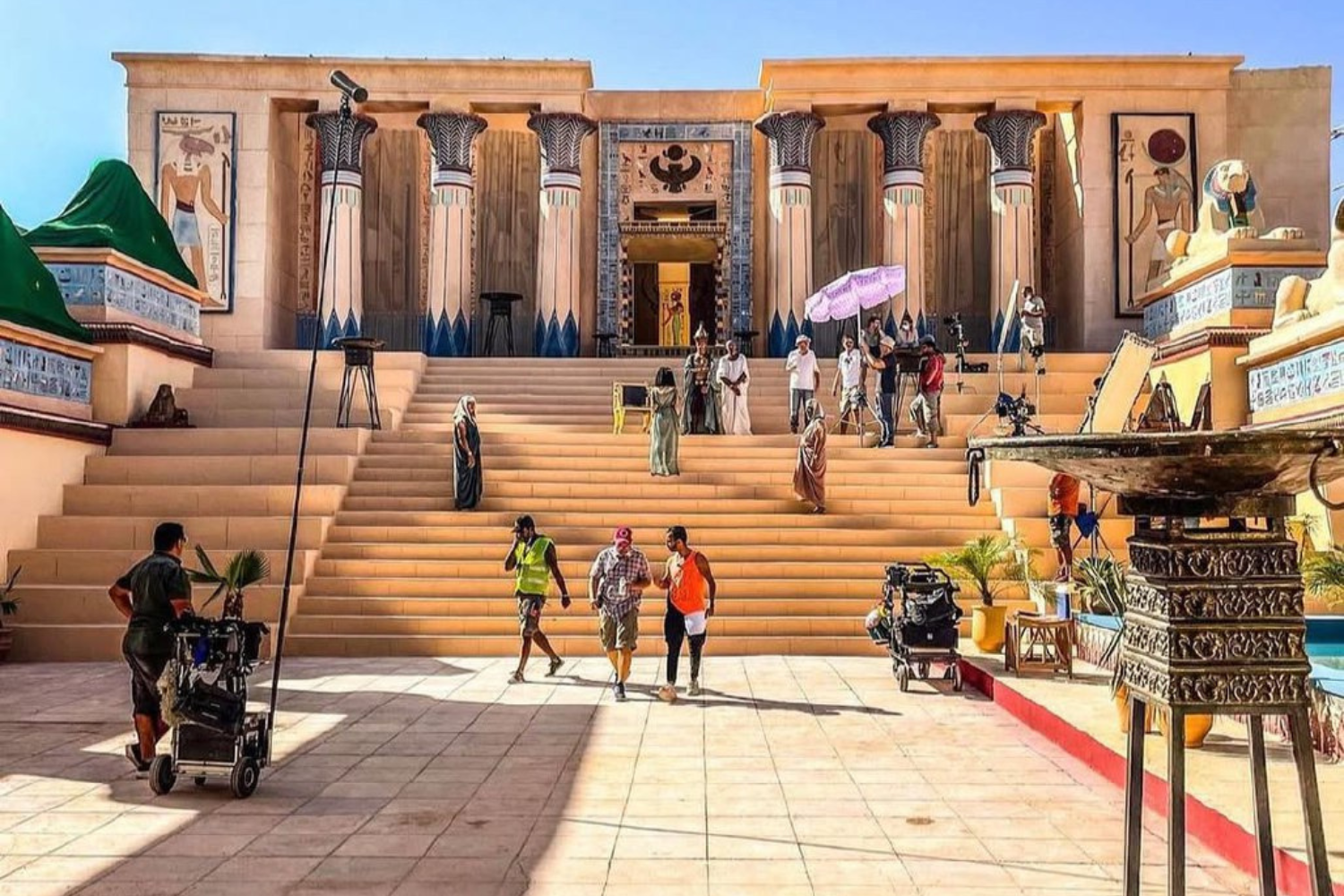
The site has served as a backdrop for numerous international film and television productions due to its preserved authentic aesthetic.
The historic entrance features intricate clay designs and provided a critical security checkpoint for caravans passing through the Ouarzazate region.
They complement each other; travelers seeking an efficient overview of historic clay architecture prefer a from marrakech day trip to ouarzazate and ait benhaddou, while those desiring deep desert immersion find the multi-day excursions more satisfying.
| Feature | Top pick Ouarzazate Day Trip | Sahara Multi-Day Tour |
|---|---|---|
Time Commitment |
12–14 hours | 2–4 days |
Depth of Exploration |
Limited to landmarks | Extensive regional immersion |
Physical Exhaustion Level |
Moderate (high transit) | High (remote travel) |
Cost Efficiency |
High (per day) | Varies (includes lodging) |
Pace |
Rapid | Moderate to slow |
Destination Focus |
Ksar and film sites | Dunes and nomadic heritage |
| See tickets → |
Verdict: Choose a from marrakech day trip to ouarzazate and ait benhaddou tours if you have limited time, or select a multi-day itinerary if you prioritize the experience of the Erg Chebbi or Zagora sands over from marrakech day trip to ouarzazate and ait benhaddou tickets.
Choose your ticket, select your date, and reserve in under two minutes. Secure checkout handled by our verified partner.
Instant confirmation by email, with a mobile voucher you can save offline. No printing, no queuing at a collection desk.
Arrive at the entrance, show your voucher on your phone, and walk in. Most tickets include priority or skip-the-line access.
Practical details for your visit straight from our verified partners — hours, access, rules, and how to get there.
Varies by operator
Pick-up services are standard for these tours
Follow the N9 highway via the Tizi n'Tichka pass from Marrakech
Hire a grand taxi for a private day excursion
Modest clothing is recommended when visiting local villages during your from marrakech day trip to ouarzazate and ait benhaddou.
Keep belongings secure as this is a historic site. Tour vehicles provide a safe place to store larger luggage during your visit.
Photography is permitted throughout the ksar. Please respect the privacy of residents living within the Ait Ben Haddou earthen structures.
The site consists of narrow, steep, and uneven earthen paths. It is not suitable for wheelchair users or those with limited mobility.
Mobile signal is generally reliable in the vicinity. Use phones for navigation and photos but be mindful of battery life in heat.
The area is interesting for children, though supervision is necessary due to steep staircases and uneven ground. Consider this on your from marrakech day trip to ouarzazate and ait benhaddou.
There are small cafes and restaurants serving tagine and tea near the Ouarzazate site. Carry bottled water, especially during summer months.
Pets are generally not permitted inside the historical ksar structures. Check with your transport provider for their specific pet policy.
The site is a UNESCO World Heritage location. Respect the local heritage during your from marrakech day trip to ouarzazate and ait benhaddou.
Best time to go, insider tips, nearby landmarks, and the cancellation fine print — flip through to skim what matters to you.
How crowds, weather, and events shift across the year.
March to May offers pleasant temperatures for exploring the mud-brick architecture.
June to August is very hot, requiring early arrival for your from marrakech day trip to ouarzazate and ait benhaddou.
September to November provides mild weather and clear skies for photography.
December to February is cool, though mountain passes may occasionally experience snow.
Small details that turn a good visit into a great one.
Arrive between 08:00–10:00 to experience the site before large bus tours.
Wear shoes with good grip to navigate the steep, slippery clay paths.
Carry small change in MAD for tips at private sites inside the ksar.
Pack at least 2 liters of water for your from marrakech day trip to ouarzazate and ait benhaddou.
Hire an official local guide to explain the history of the Berber defensive architecture.
Non-bookable sights within a short walk — free to visit, easy to pair.
Sprawling set used for major cinema productions.
Historic 19th-century residence built from earthen clay.
Lush valley landscape hidden in rocky desert terrain.
Flexible, no hidden fees.
Full refunds are typically available for cancellations made at least 24 hours in advance. Entrance to the ksar is 0 MAD, but tour bookings may have specific operator terms.
Hand-picked options within walking distance — pick a district for vibe, or a specific hotel for convenience.
Various hotels and riads near the film studios.
Traditional guesthouses located within the historic area.
Aït Ben Haddou contains almost no fired brick. The ksar is built from pisé — river mud, straw and gravel rammed between wooden shutters, then patched again after each winter rain. Its towers rise above the Ounila River on the caravan corridor that once carried salt south and gold north between Marrakech and the Draa Valley. From Marrakech Day Trip to Ouarzazate and Ait Benhaddou tours retrace that corridor with unusual precision, crossing the High Atlas at Tizi n'Tichka, 2,260 metres above sea level. The ksar was inscribed on the UNESCO World Heritage list in 1987. Its oldest surviving structures date from the seventeenth century, though the settlement pattern is far older. Fortified granaries crown the summit. Below them, kasbahs of the merchant families step down the slope in tiers, their upper walls carved with geometric relief that reads as decoration and functions as shade. Fewer than ten families now live inside the walls. Most residents moved across the river decades ago, to the modern village whose footbridge and causeway carry the day's visitors. Ouarzazate, thirty kilometres east, grew from a French garrison town into Morocco's film capital. Atlas Film Studios opened in 1983 on the plateau outside the city. The Taourirt Kasbah, seat of the Glaoui family who controlled the Atlas passes until 1956, stands at the eastern edge of the old town with more than three hundred rooms behind its pale walls. A Ouarzazate and Aït Ben Haddou day tour therefore covers two distinct chapters: a pre-colonial trade fortress and a twentieth-century industrial experiment in the desert. The landscape explains both. South of the pass, rainfall drops below 150 millimetres a year, and the palm groves survive only along the seguias — the irrigation channels that thread each valley floor. Earth architecture answers that climate directly: thick walls, small windows, flat roofs, interior courtyards that trap cool night air. Erosion is constant. Conservation teams rebuild sections of the ksar with the original technique rather than concrete, because cement traps moisture and cracks the earth behind it. That decision is why every From Marrakech Day Trip to Ouarzazate and Ait Benhaddou tour still reaches a living building rather than a stabilised ruin, and why the silhouette photographed from the far bank of the Ounila has changed remarkably little in a century.
"Cement traps moisture and cracks the earth behind it, so the ksar is still rebuilt the way it was first raised."
A step-by-step walkthrough of the visit — what you'll see, how long each stage takes, and the details that matter.
You leave Marrakech while the streetlights are still on, and the city thins to argan scrub within twenty minutes. The road climbs. At Tizi n'Tichka the vehicle pulls over at 2,260 metres, and you stand in thin, cool air above a valley whose floor you cannot see. Then the descent: red rock, terraced villages, a roadside stall selling amethyst and fossils. By the time you reach the Ounila River the light is hard and white. You cross the causeway on foot — sandals are a mistake here — and the ksar rises in front of you in stepped tiers. Entry costs nothing; 0 MAD gets you through the gate, and a few dirhams left with a household that opens its roof terrace is the local courtesy. You climb. The lanes narrow, turn, and end in a stairway cut into packed earth. At the granary on the summit you stop and turn around: the valley, the palms, the new village on the far bank. Later you walk the Taourirt Kasbah in Ouarzazate, where painted cedar ceilings sit above rooms barely two metres wide. Most From Marrakech Day Trip to Ouarzazate and Ait Benhaddou tickets end here, or at the studio gates outside town, before the road turns back toward the pass.
The site is open daily from 08:00–18:00. This applies to all days of the week.
There is no entrance fee (0 MAD) to enter the ksar. You may offer small tips for private sites.
The best arrival window is 08:00–10:00 to avoid mid-day crowds and peak heat.
Yes, you can explore the site independently, though hiring a local guide enhances the historical experience.
There are no tickets required for general entry to the ksar. Your tour operator manages logistics.
The drive typically takes 3.5 to 4 hours from Marrakech via the Tizi n'Tichka pass.
Bring sunscreen, a hat, sturdy walking shoes, and bottled water.
Due to steep, uneven paths, the site is not accessible for strollers or wheelchairs.
Yes, there are local cafes and restaurants in the area serving traditional food and refreshments.